Plocka
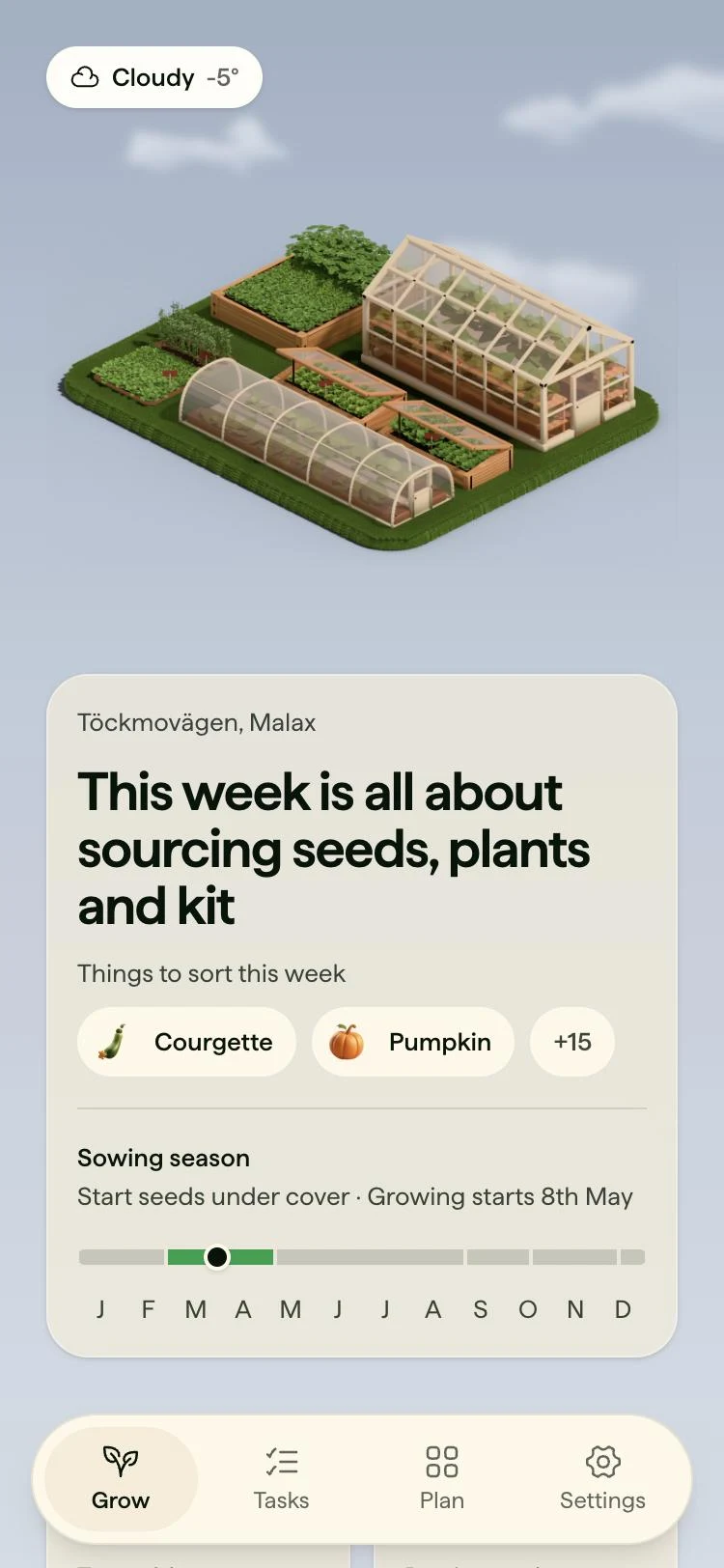
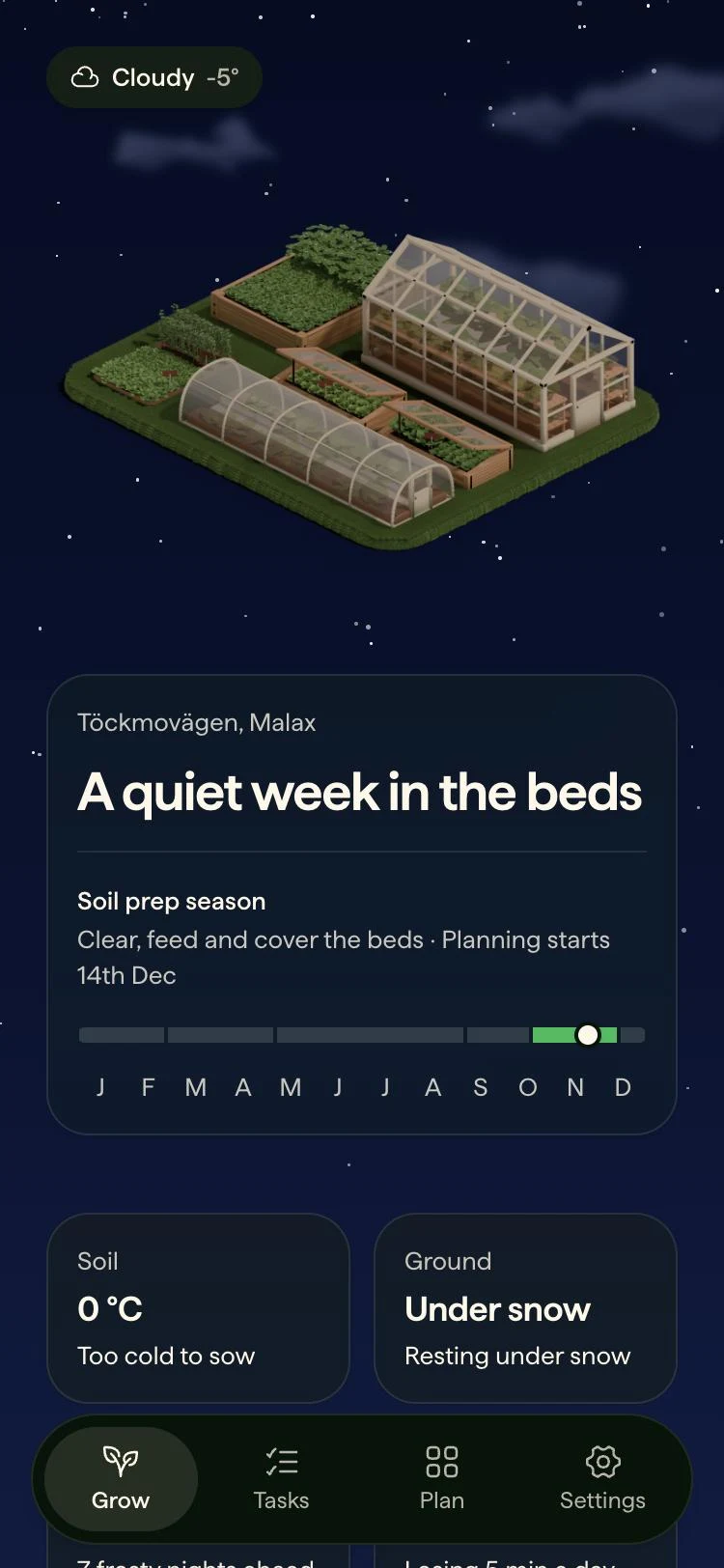
Plocka Grow screen on a cloudy day: the garden, and what this week is about

A growing app made for the love of just making things really nice

A hobby project that helps people grow their own food. A chance to learn about some nerdy new science, experiment with AI coding and make something whose only goal is to be good.

Product
Plocka, growing advice for your own patch of ground
What it is
A hobby project, and an experiment in AI coding
Role
Founder, product designer and art director
Team
One designer, with Claude writing the code
Platform
Web app, Finland first

0

growth targets, ads or upsells

3 layers

of where you are, read for your exact spot

260

illustrated steps across 65 jobs

1 designer

with AI writing every line of code

The starting point

One day I want to live closer to nature and for our family to grow our own food, and actually love doing it. Plocka started with that as its inspiration.

It's also a bet. The faster technology moves, the more we'll value the things it can help with but can't do for us, and growing food is about as hands-on as life gets. Our food systems are broken too; the more people grow for themselves, the better.

And I wanted to understand it properly. Soil chemistry, frost dates, winter hardiness, crop rotation: the nerdy side of growing fascinates me, and the best way to learn it was to build something that has to get it right.

Which led to the real problem. Growing advice is written for a garden that doesn't exist. A seed packet says “sow in spring”. Whose spring?

My role

Plocka is a hobby, and an experiment: how far can a designer get with AI writing the code? I owned the idea, the research questions, the product, the brand, the 3D garden and every screen. Claude built it all, to written briefs.

With no client, no roadmap and no growth targets (beyond the vegetables), the only brief was the one I care about most: make the best experience I can.

The work

01

Three layers of “where you are”

This is the nerdy heart of it. Growing apps usually boil location down to a hardiness zone, but that's one layer of three. Plocka reads your season, your winter and your soil for the exact spot you drop a pin on, all from open data.

It changes the advice in ways a zone can't. Potatoes want acidic soil and no lime; cabbages want lime. Same bed, opposite instructions. And no job has a date: everything hangs off your frost, so “six weeks before last frost” is right in a warm year and a late one.

The catch is that the data is national. Every new country means new sources to wire up.
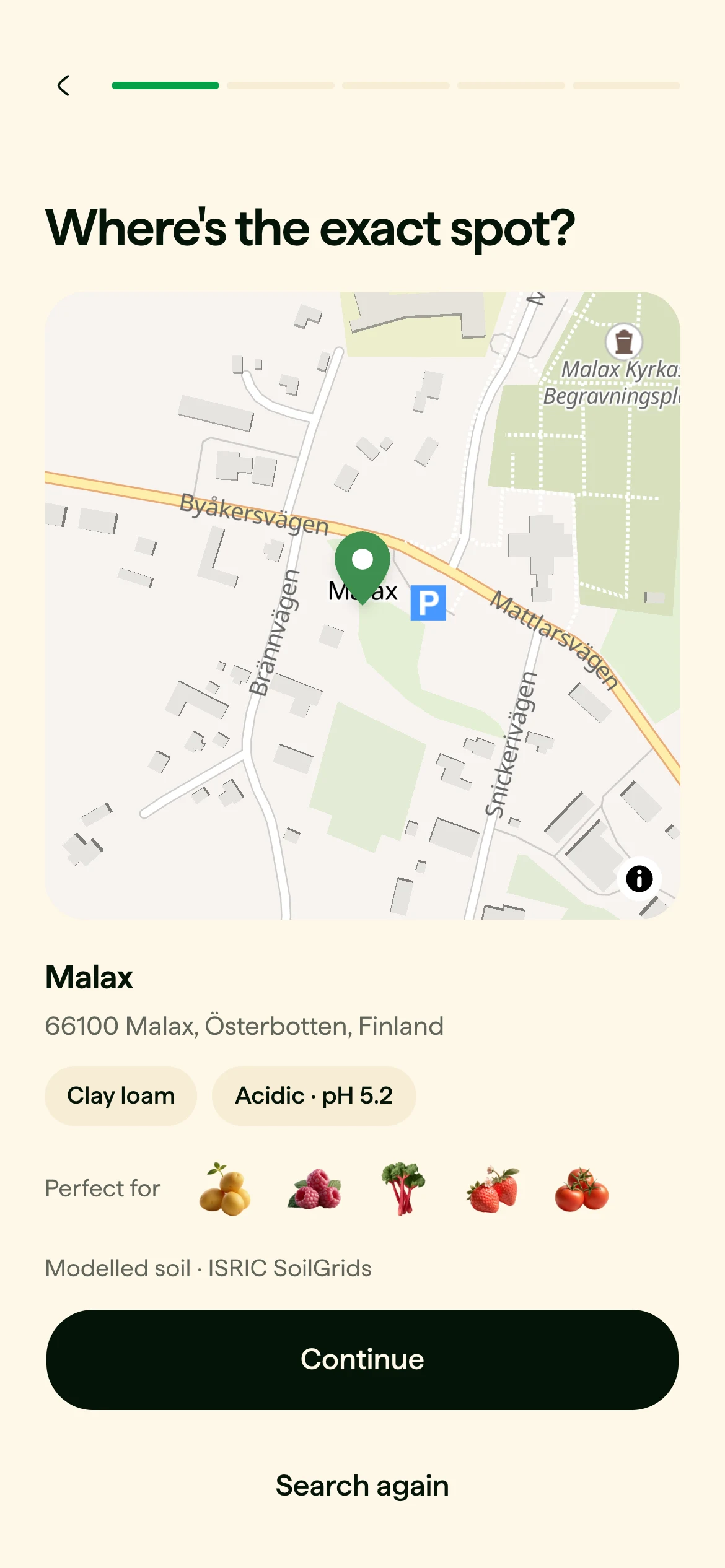
The soil read for a spot in Malax: clay loam, acidic, pH 5.2
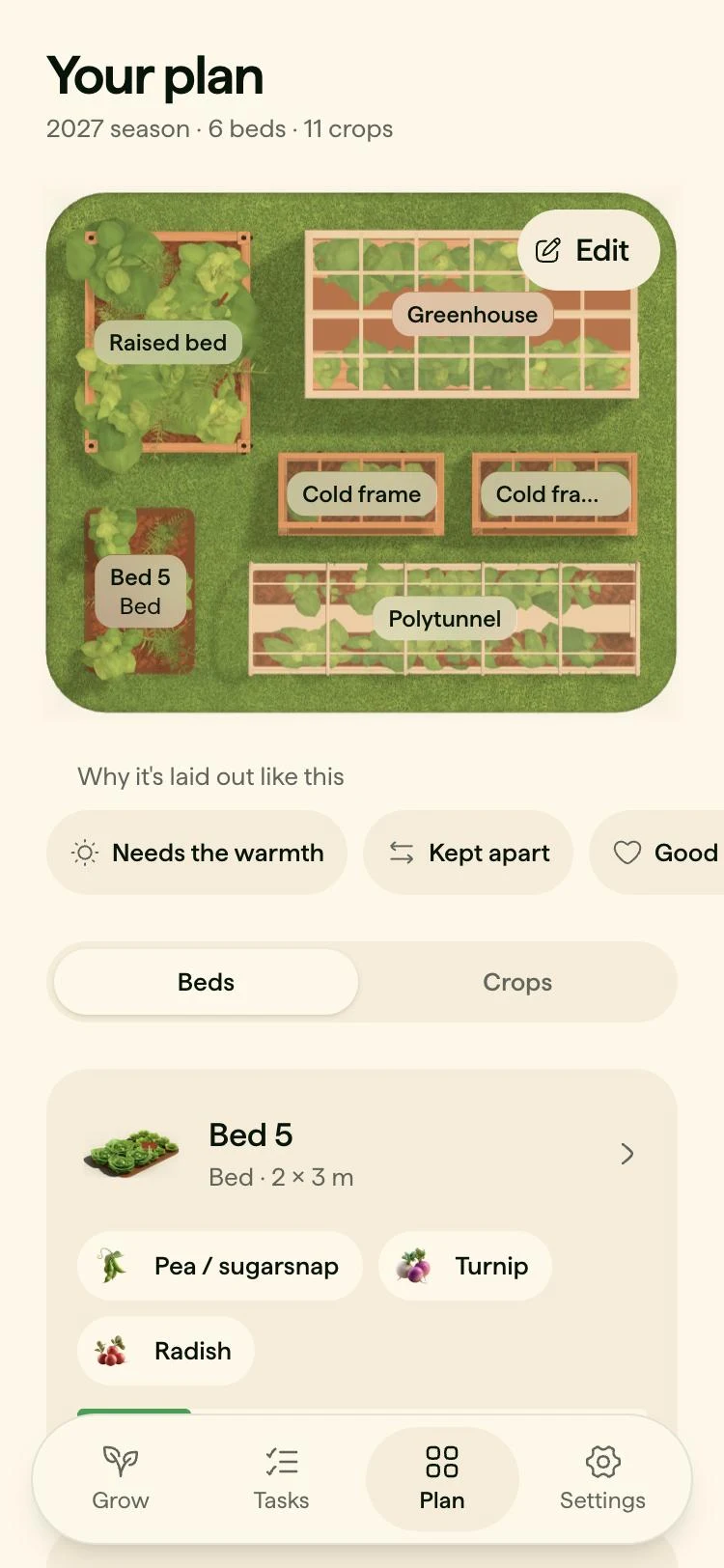
Your plan: six beds and eleven crops laid out, with why it's laid out like this
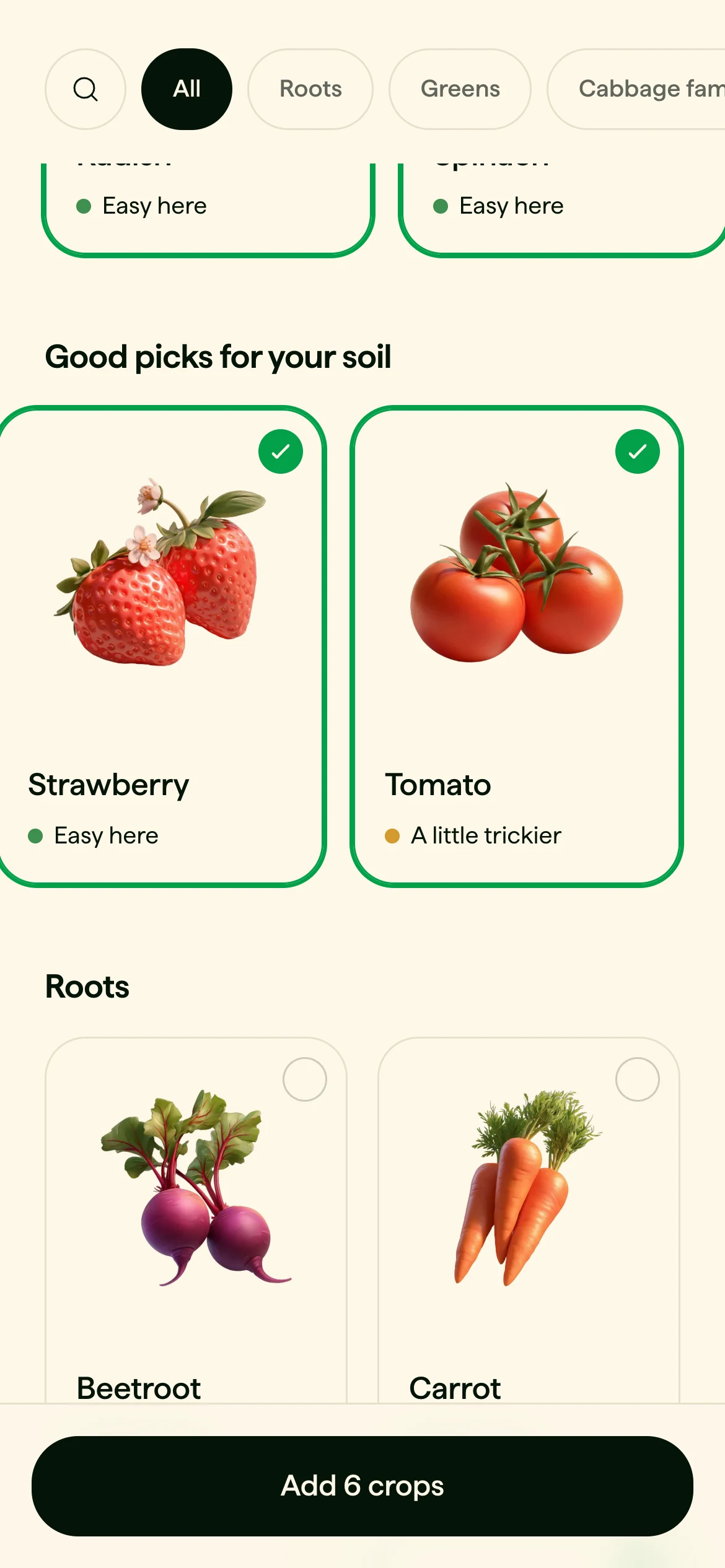
Good picks for your soil: strawberry is easy here, tomato a little trickier

02

A garden you want to check on

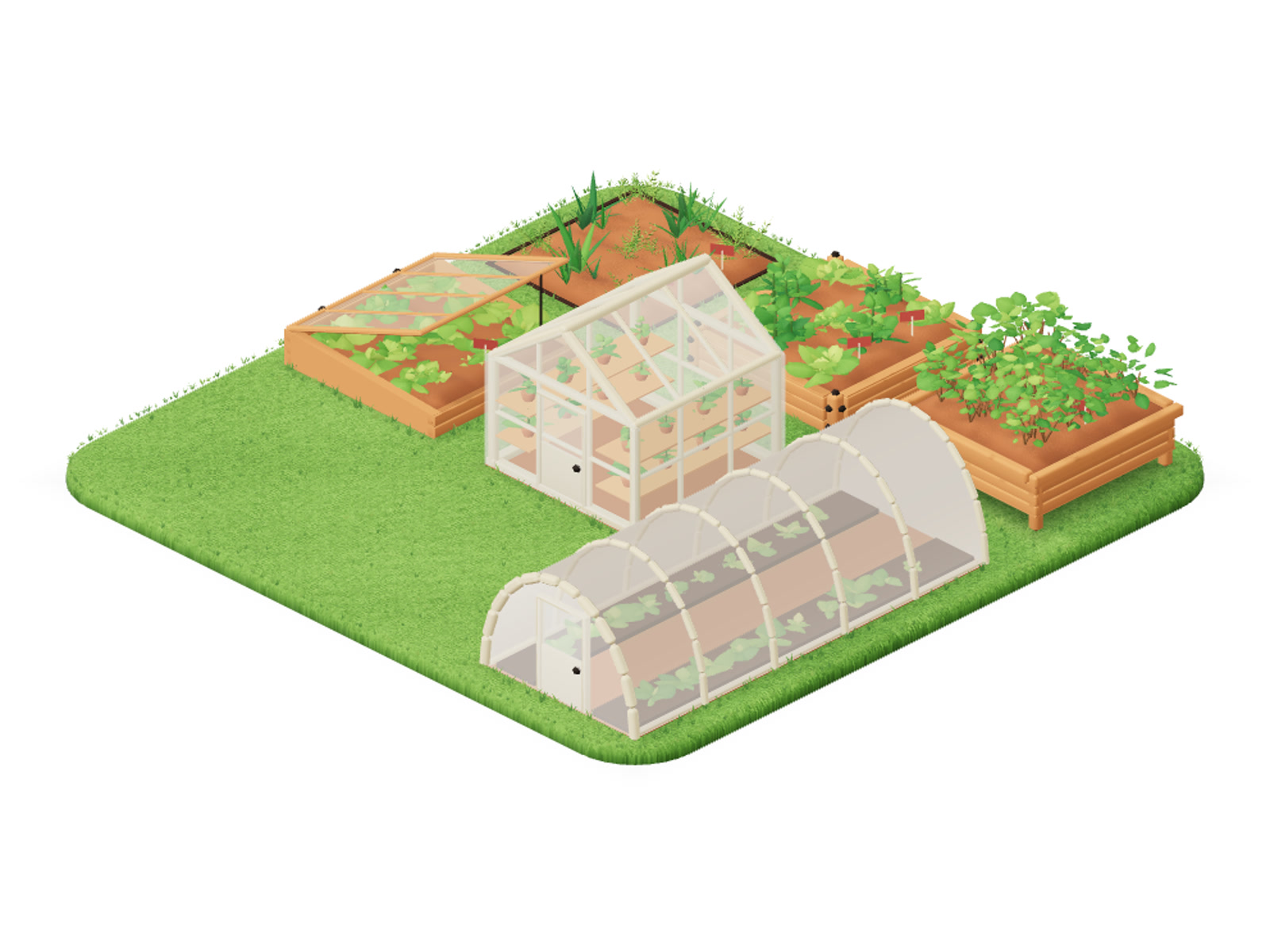
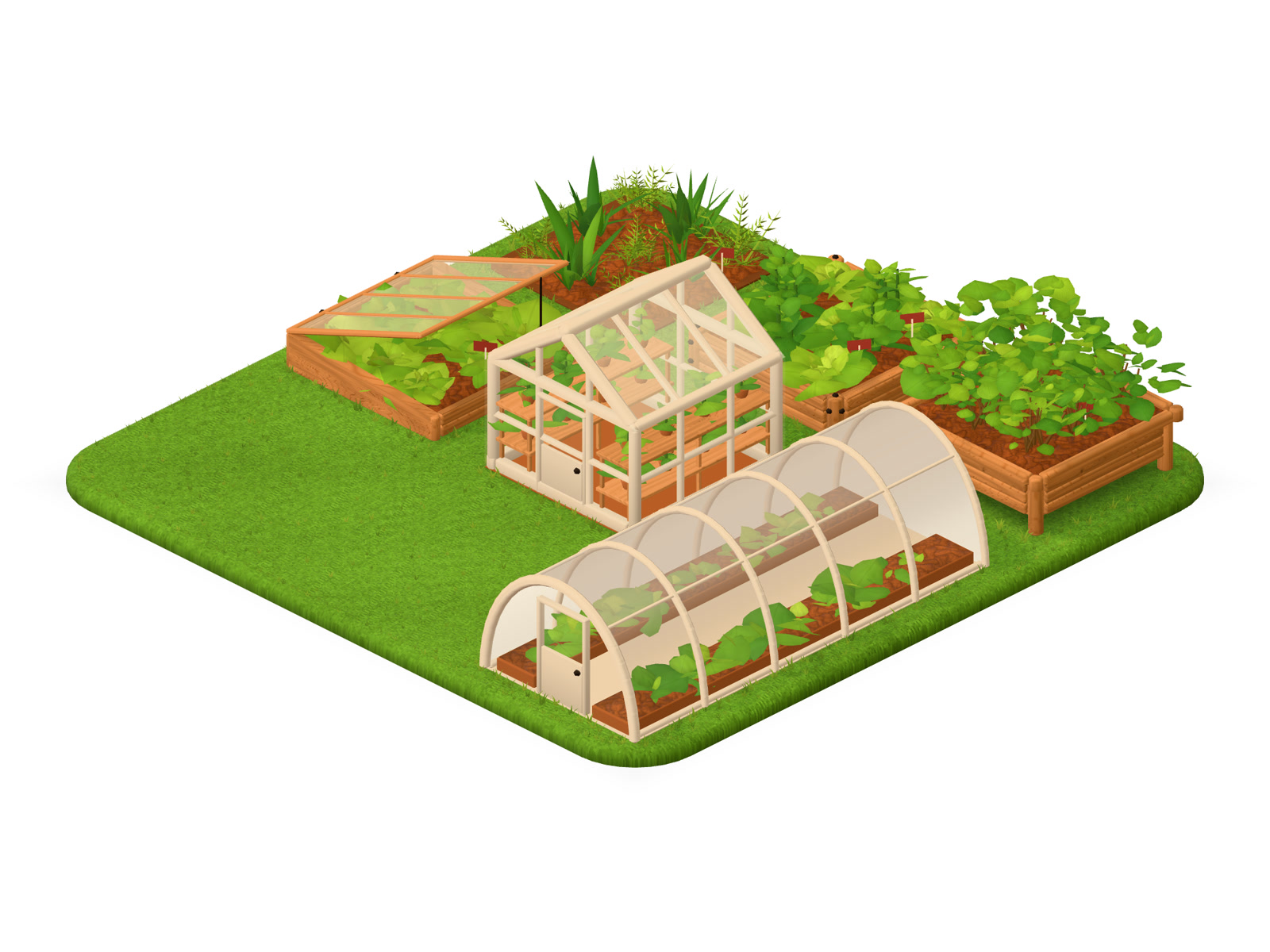
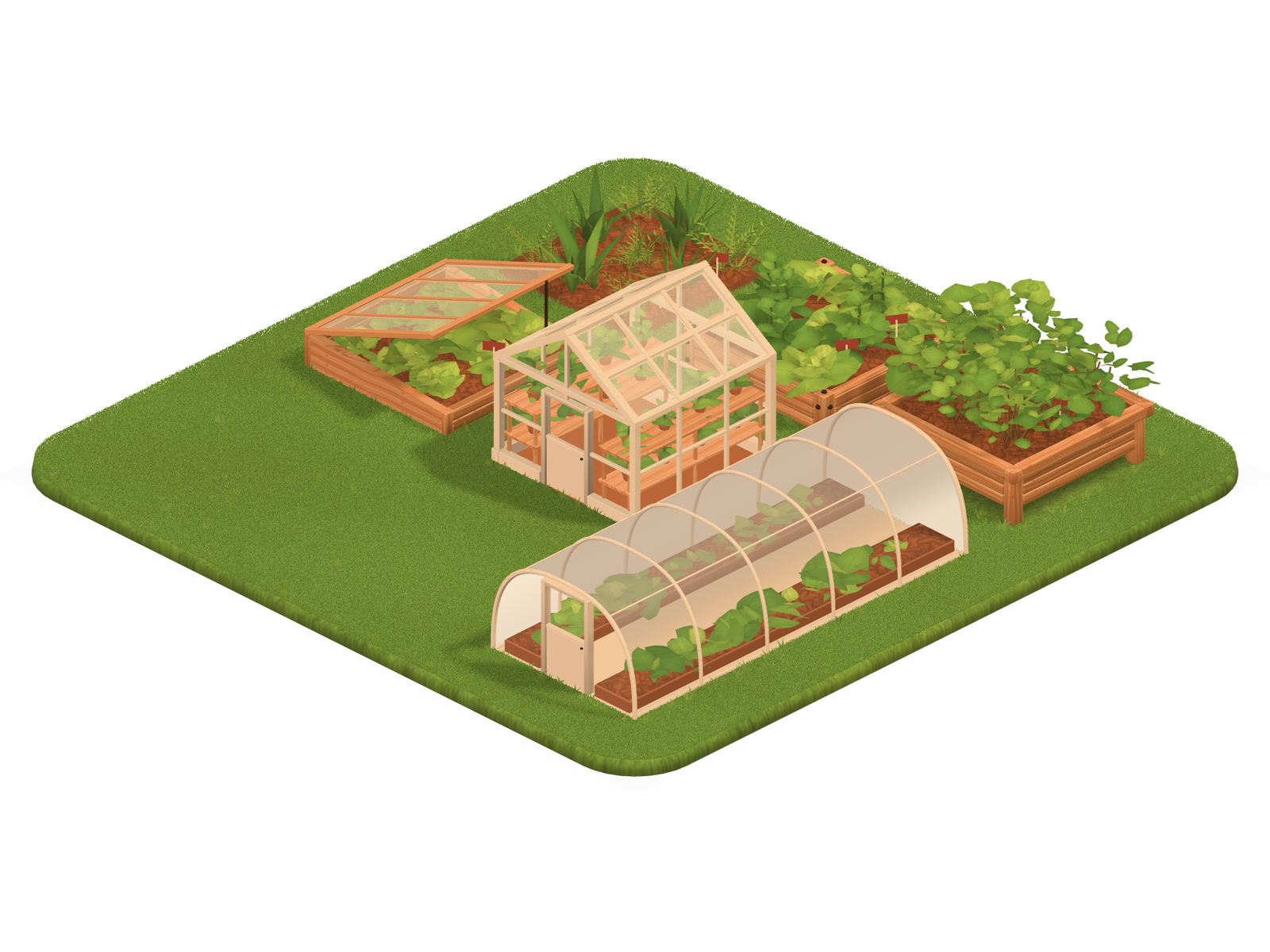
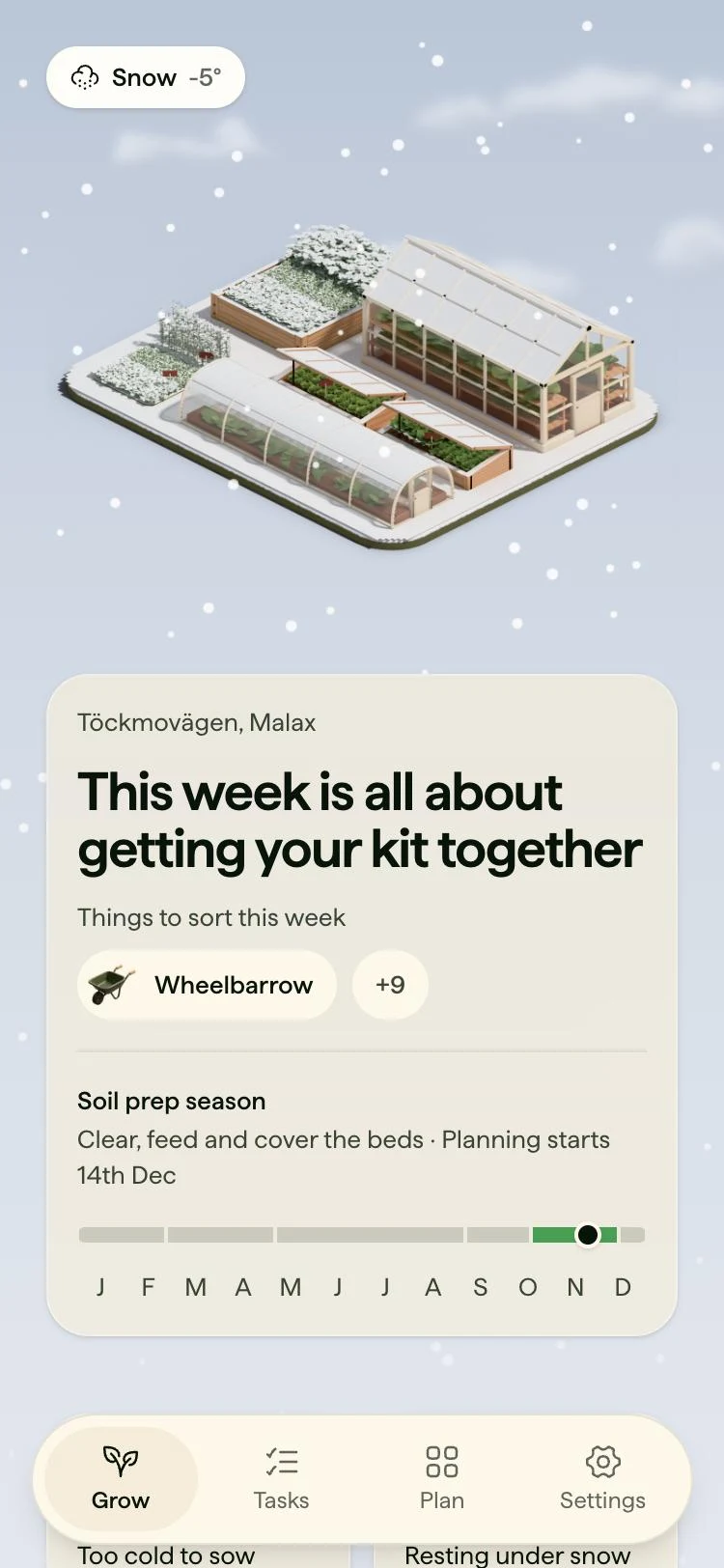
The garden is the reason to open the app. It's your actual layout in a soft 3D isometric style, under your actual sky: snow when it snows, stars at night.

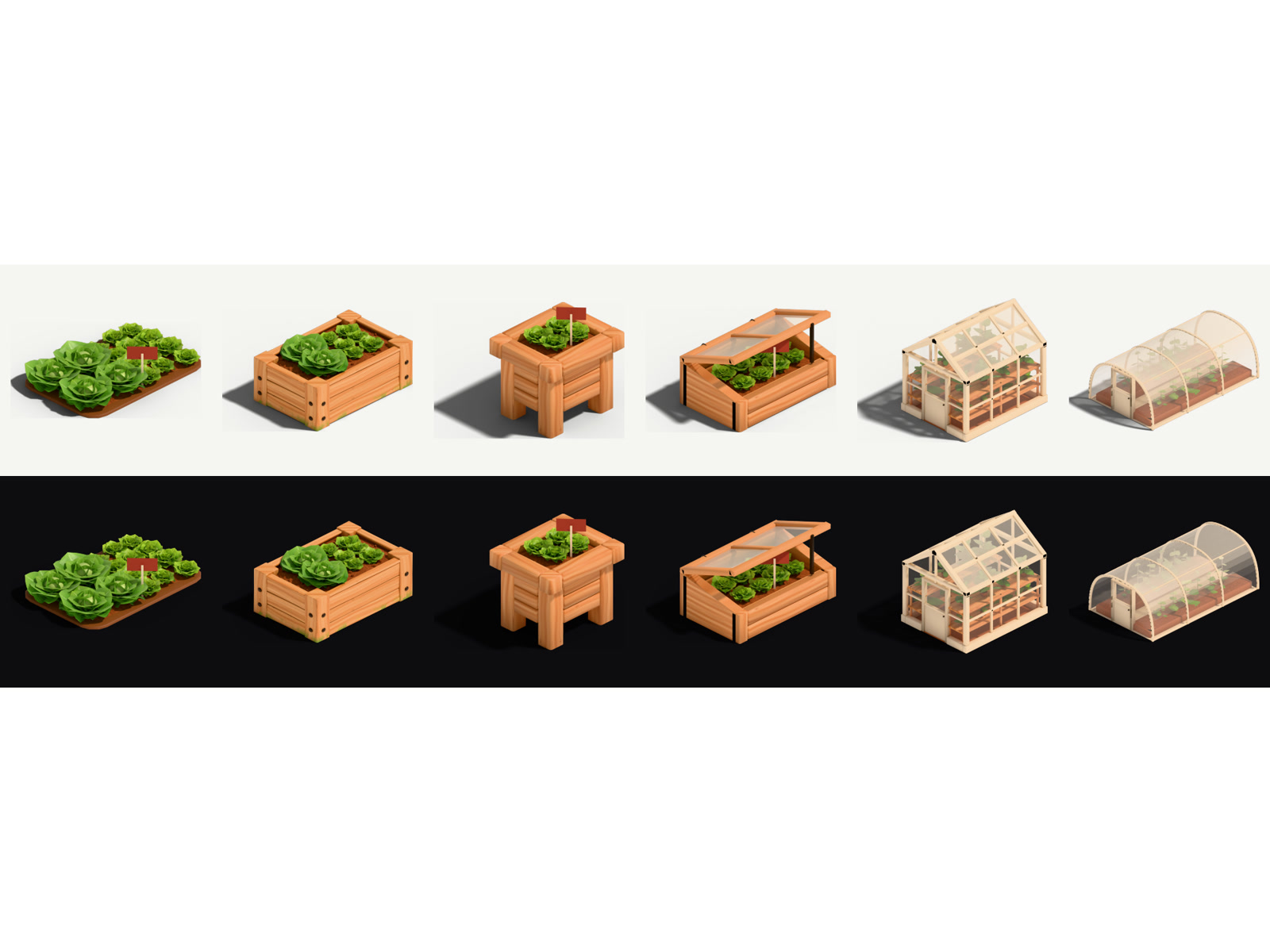
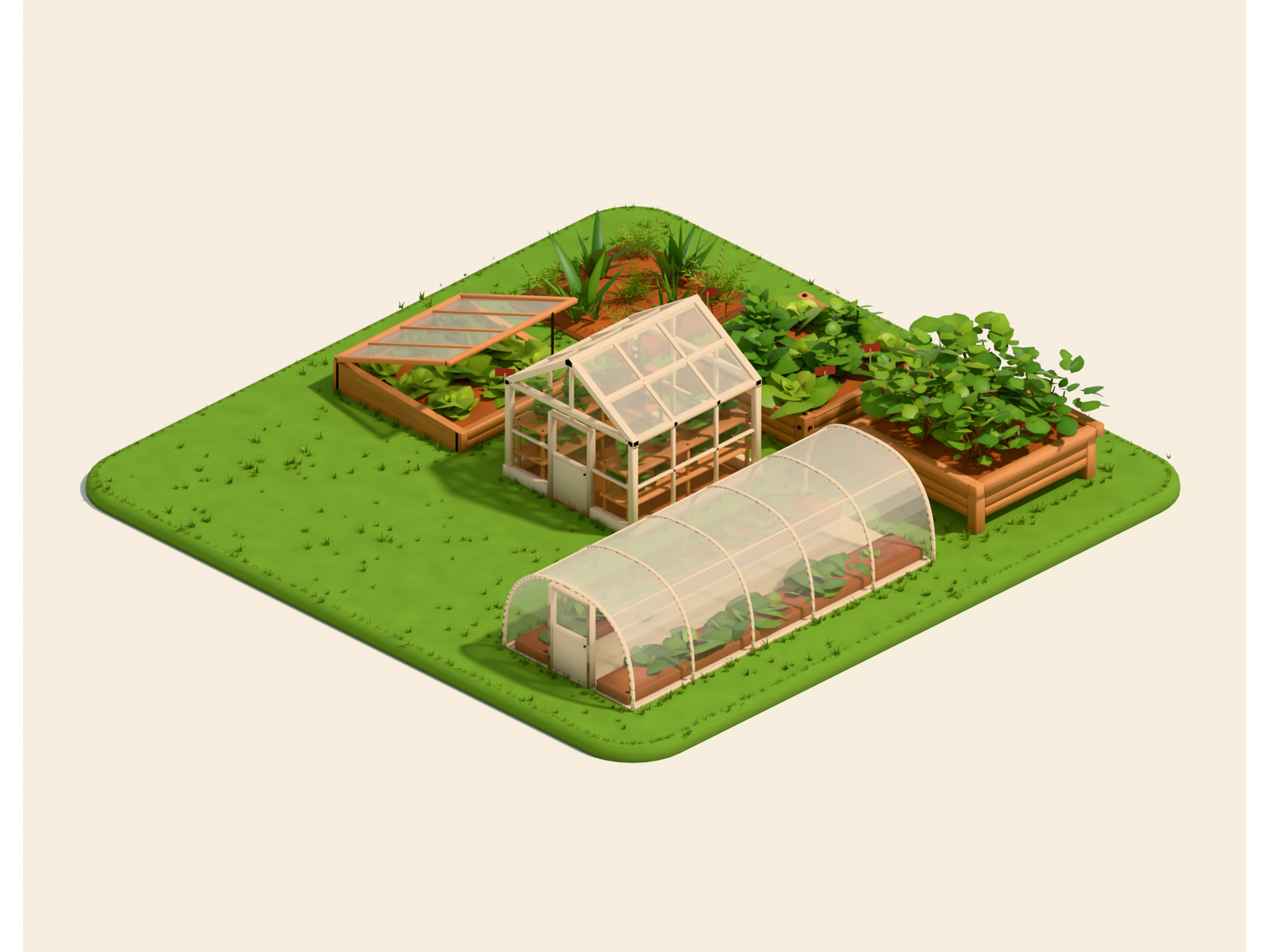
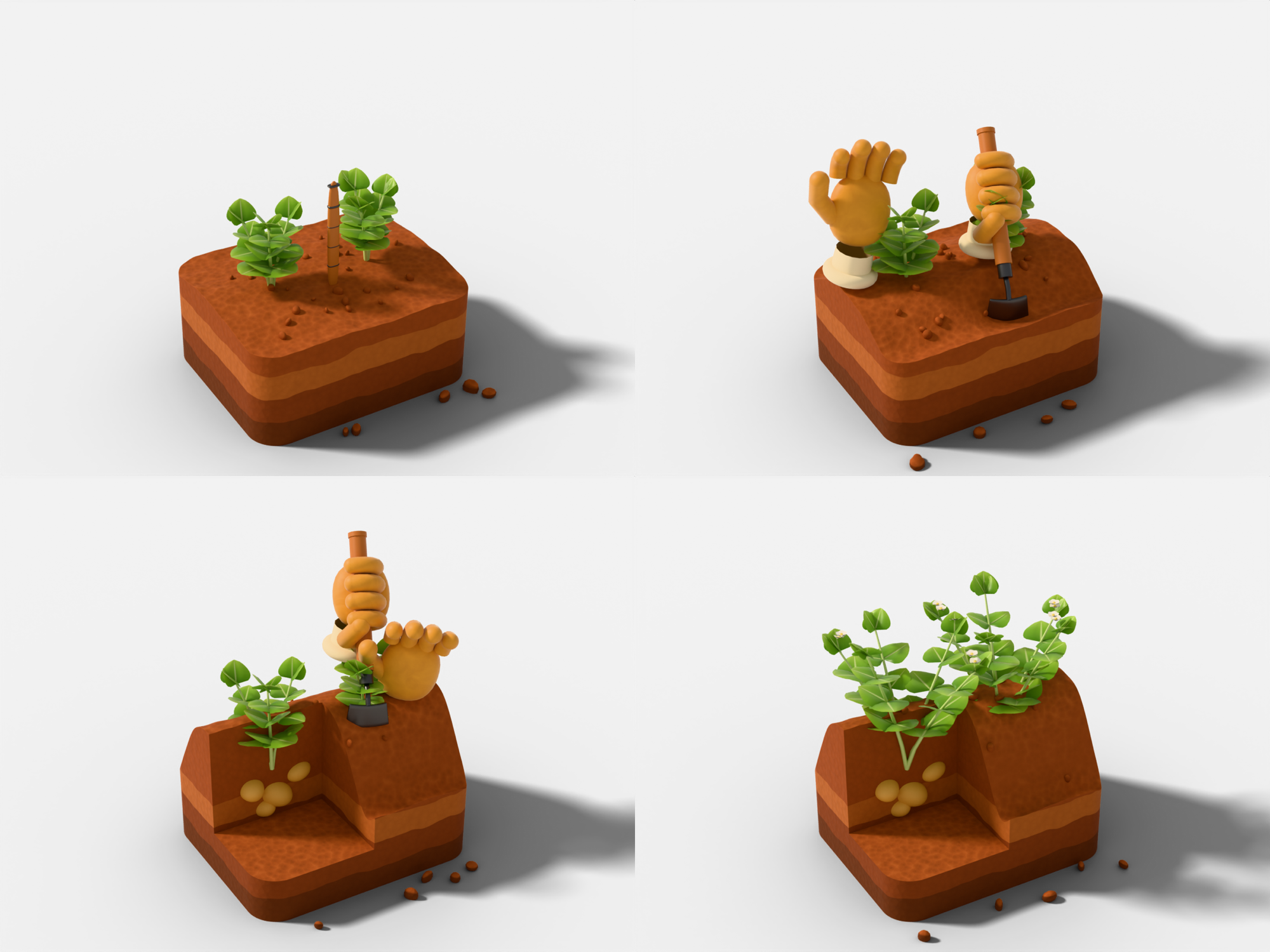
It took ten rounds to get right. Style studies on single objects first, then an isometric renderer, a move to WebGL, organic planting and a path-traced pass to find how far the look could go. Every structure had to hold up by day and by night.

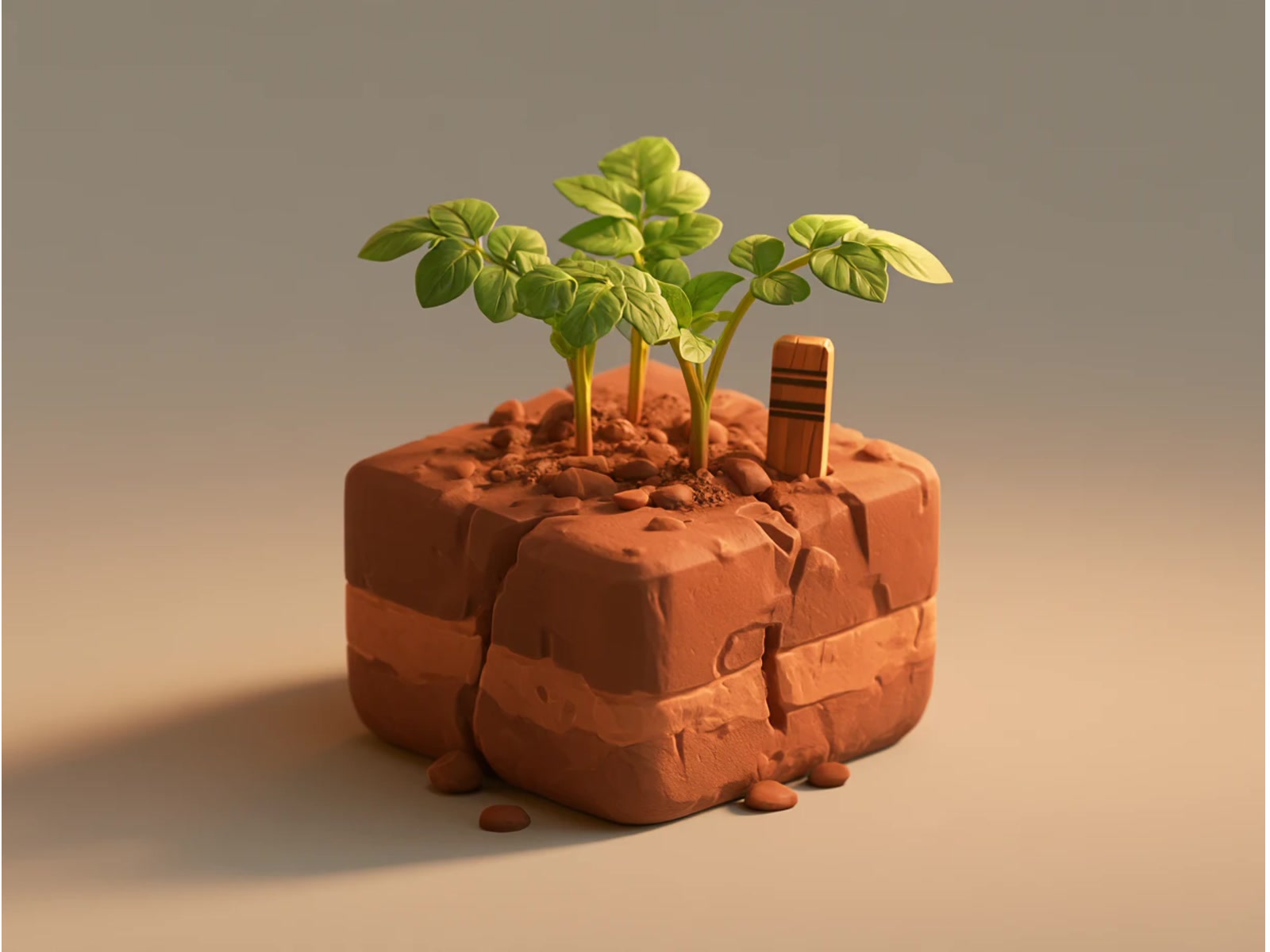
Style references, one object at a time
Round 1: the first garden, drawn in code
Round 10: deeper light and fuller planting
Every structure, by day and by night
A path-traced pass, to see how far the look could go
The garden now, rendered live in the app

03

Tasks you can actually follow

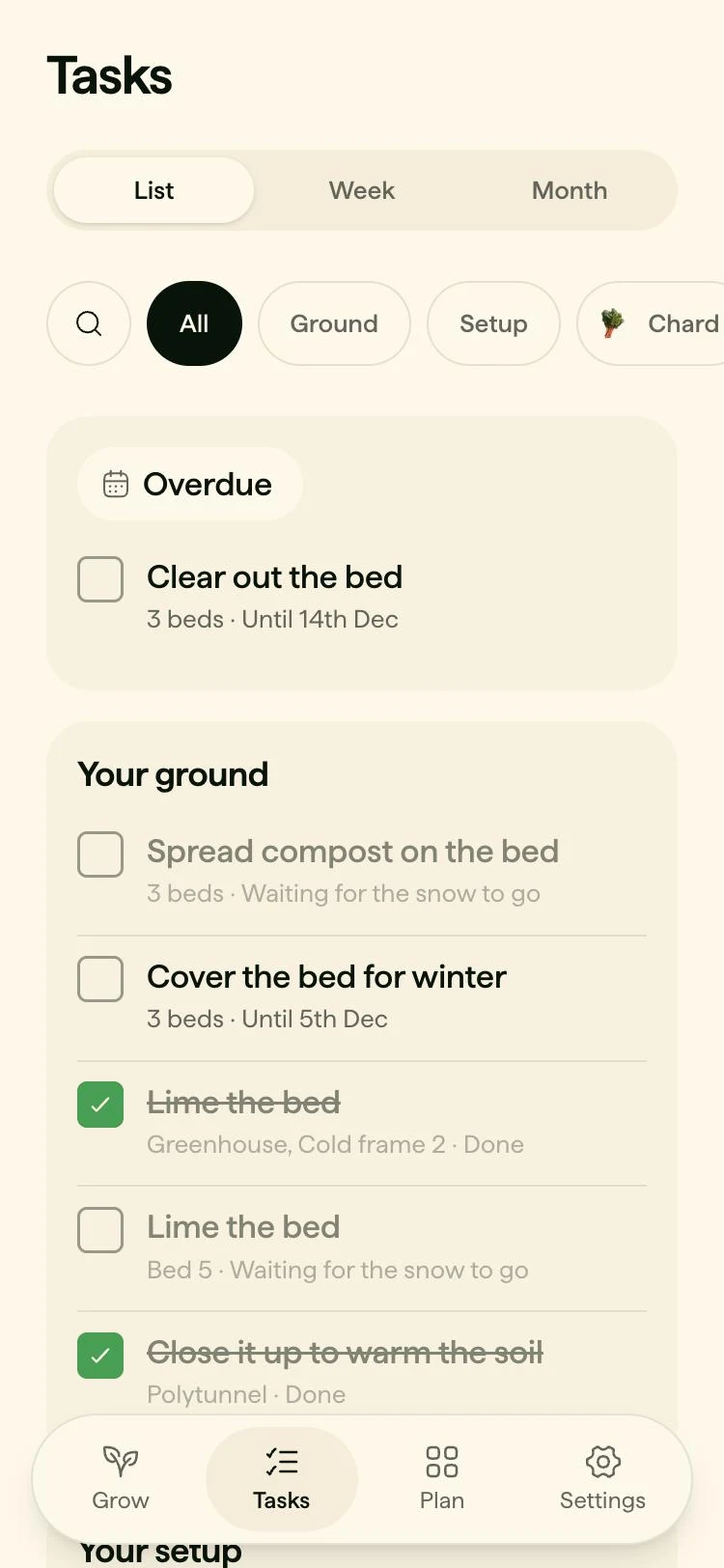
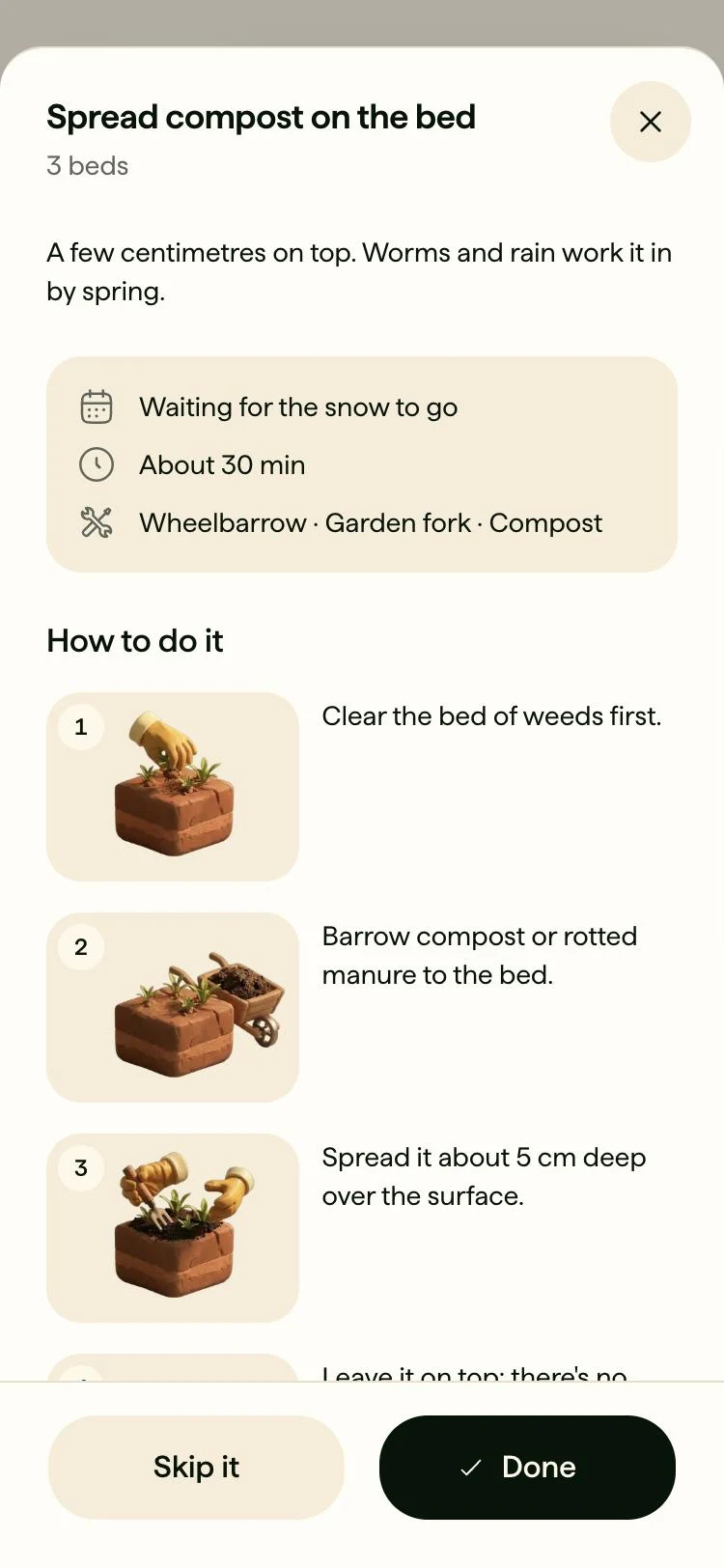
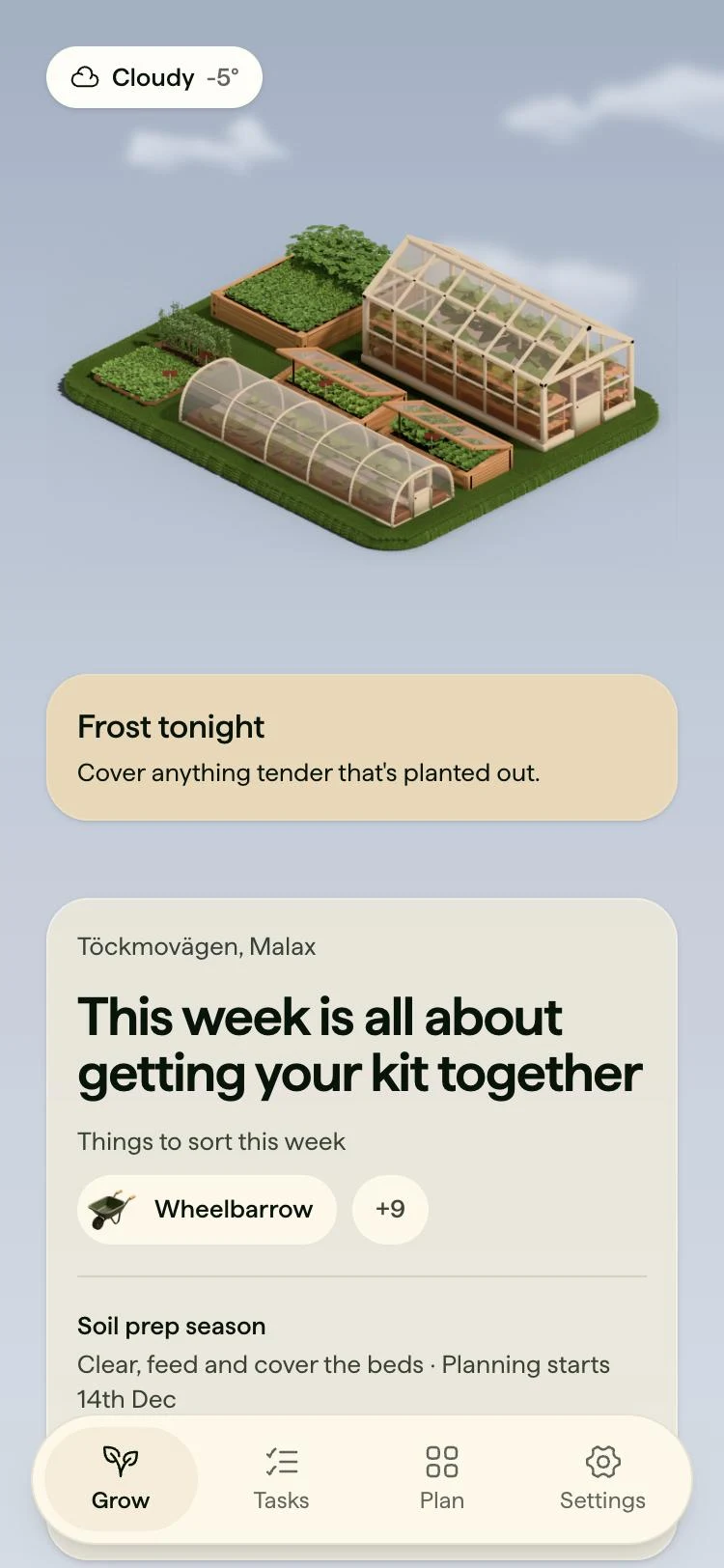
Most growing apps tell you what to do. Plocka shows you how. “Frost tonight” sits above “cover the courgettes”, and tapping a job opens the kit, the time and the steps, each one illustrated.

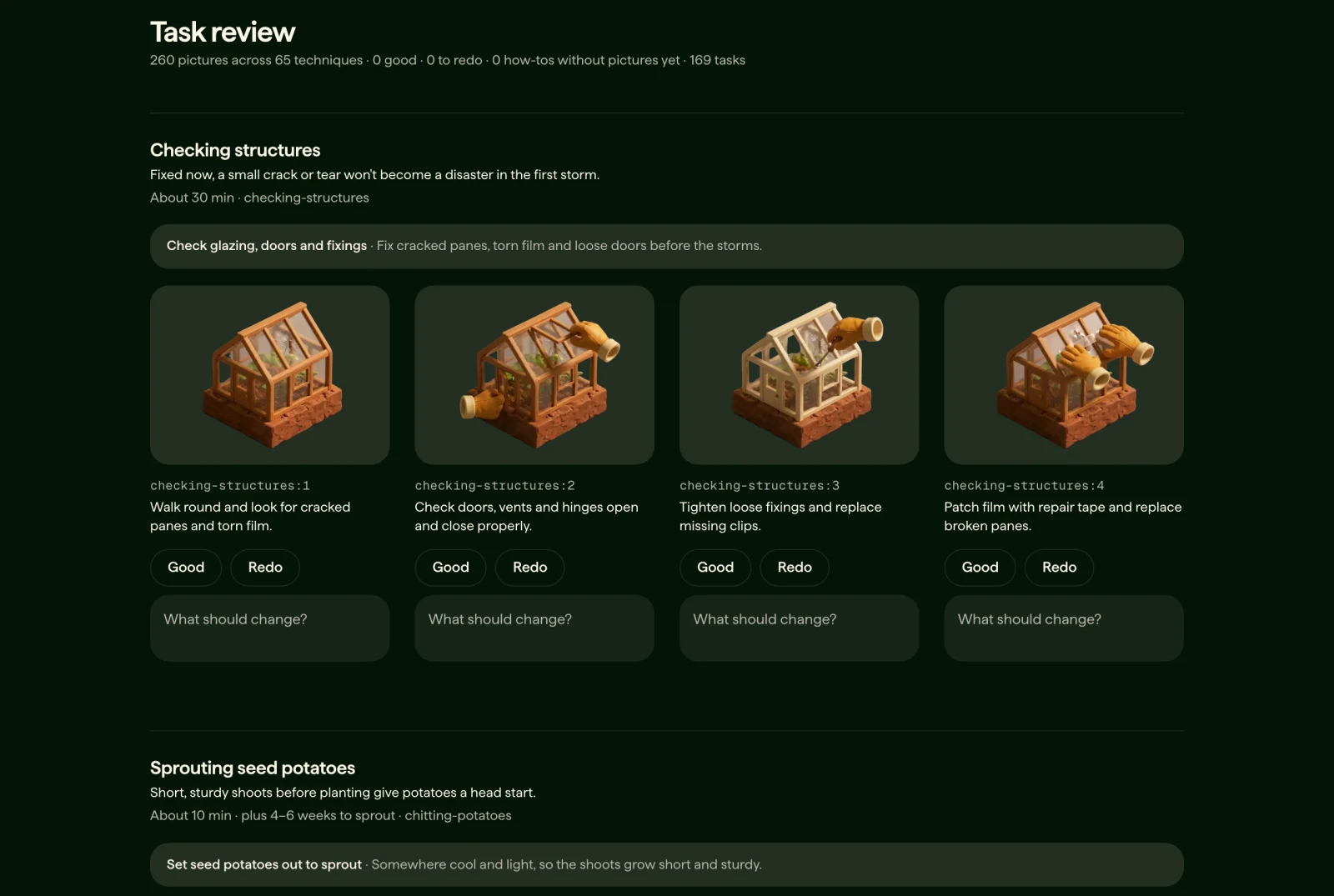
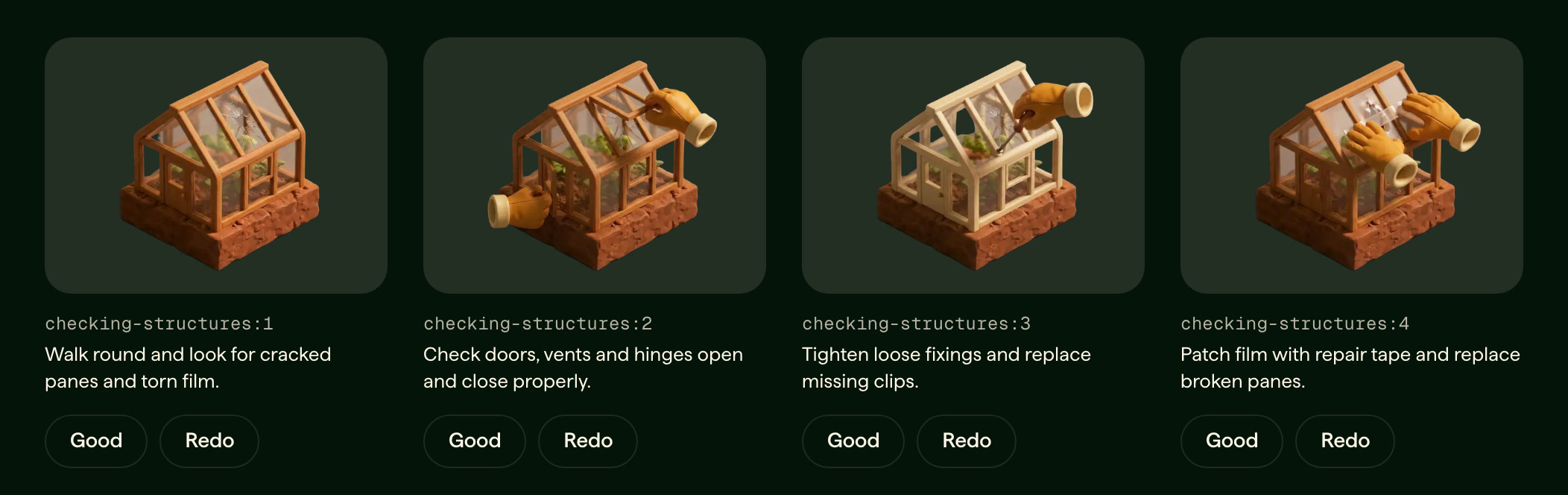
That's 260 pictures across 65 jobs. The first sketches were rough, so a review board went through every one, good or redo, until they read as a single set.

It's also the open question. Will a beginner trust the list? And what should Plocka say in December, when there's nothing to do?

Tasks: overdue first, then your ground, with jobs waiting for the snow to go
A task opened: spread compost on the bed, what you need and how to do it in steps
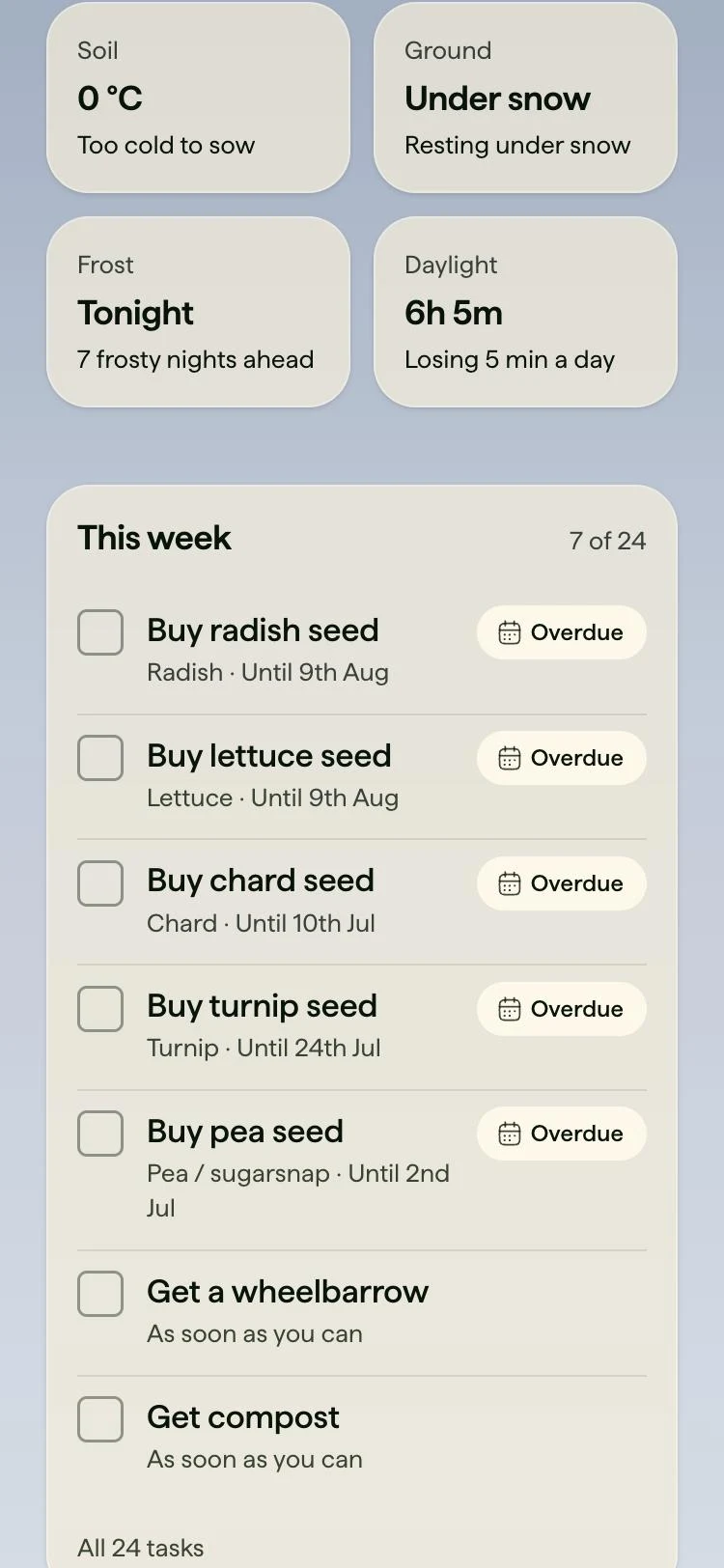
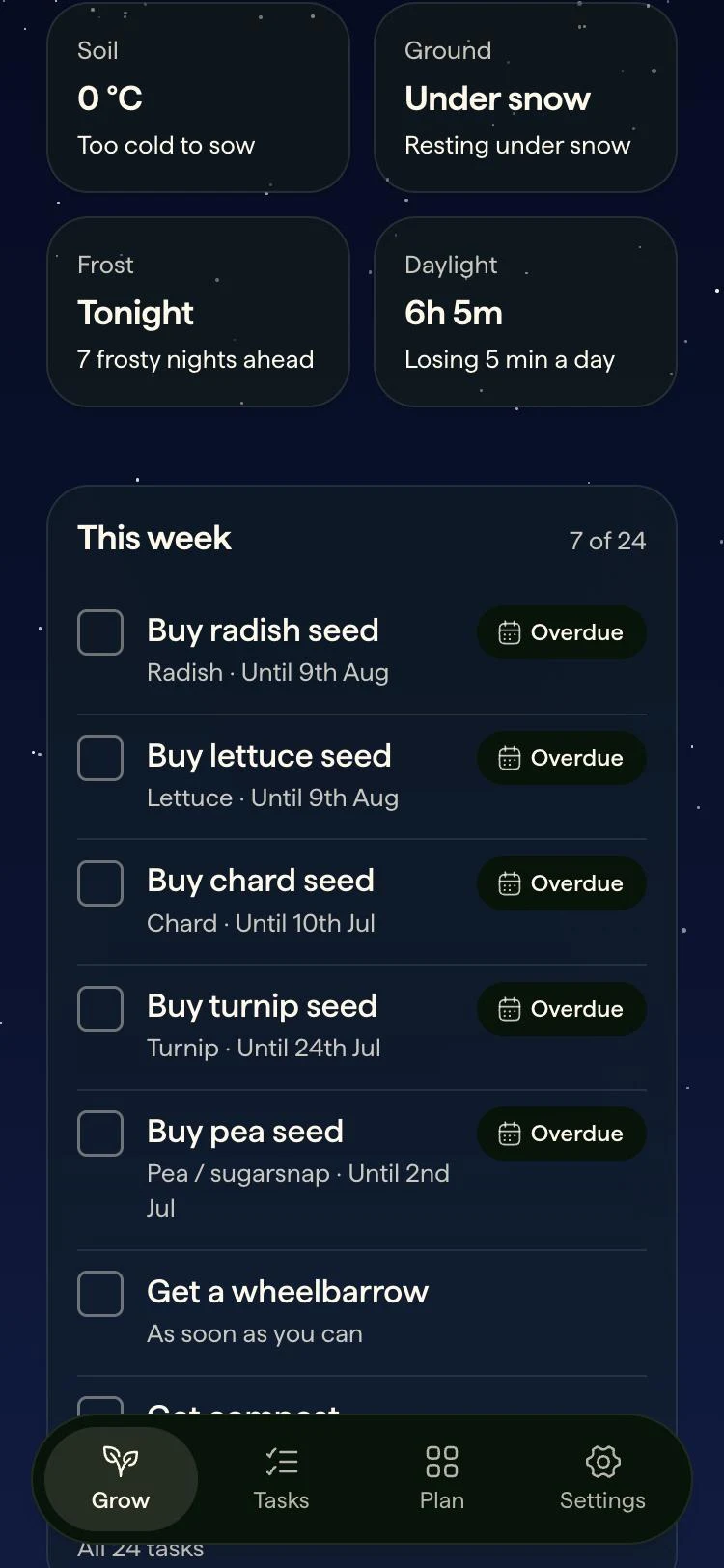
This week's tasks on Grow, under the conditions
The task review page: every step picture, marked good or redo
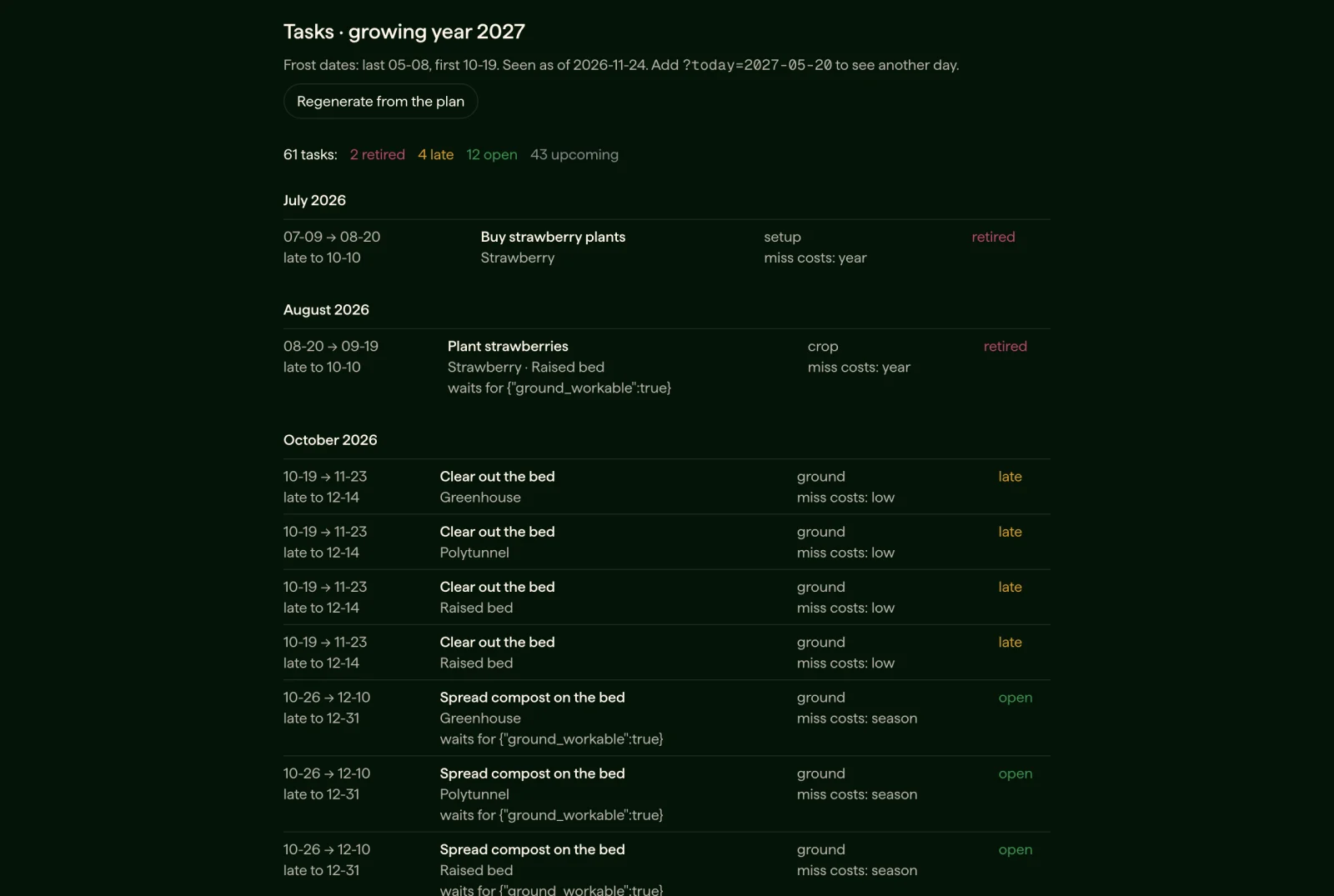
The task timeline for a growing year, with frost dates and what each job waits for
The first draft: earthing up potatoes
Now: every step reviewed, good or redo

04

Grow: everything at a glance

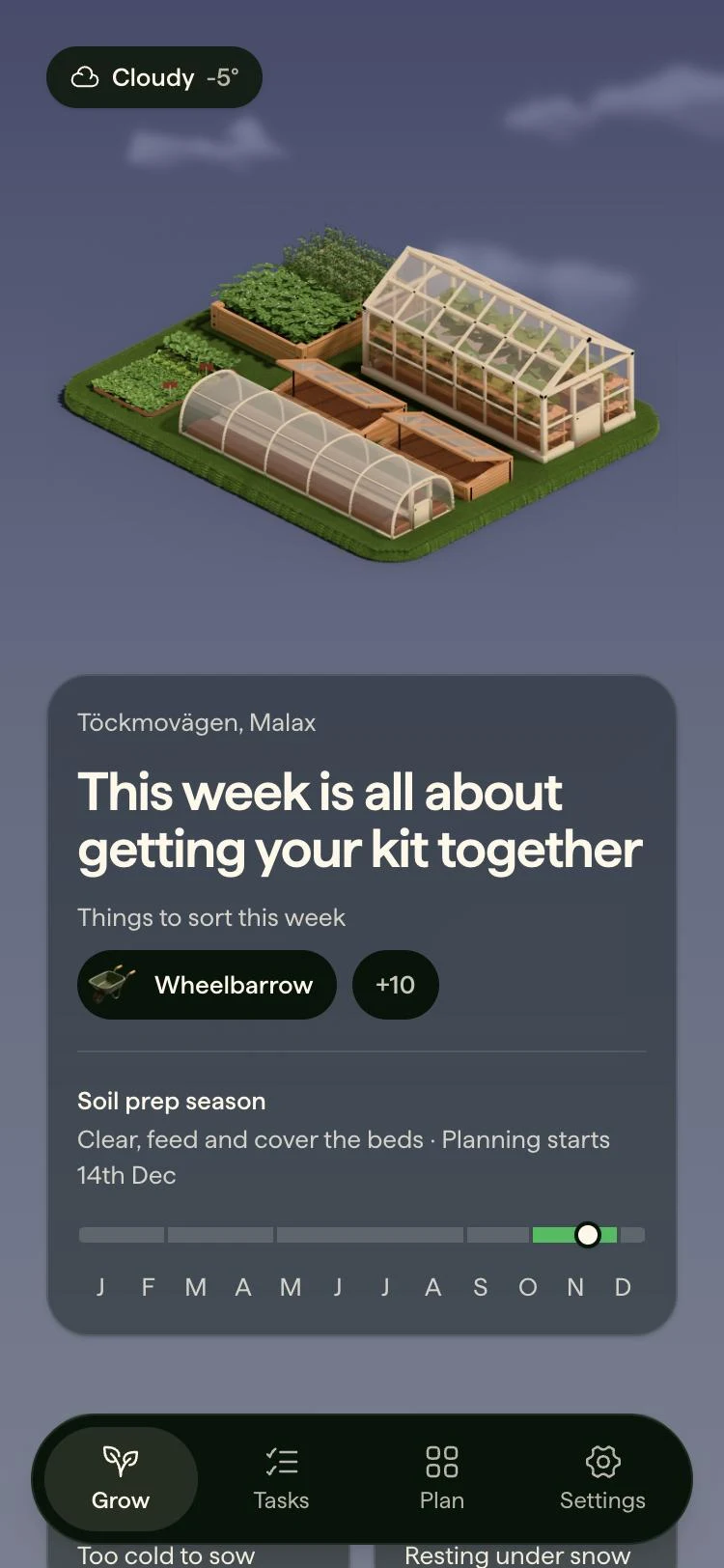
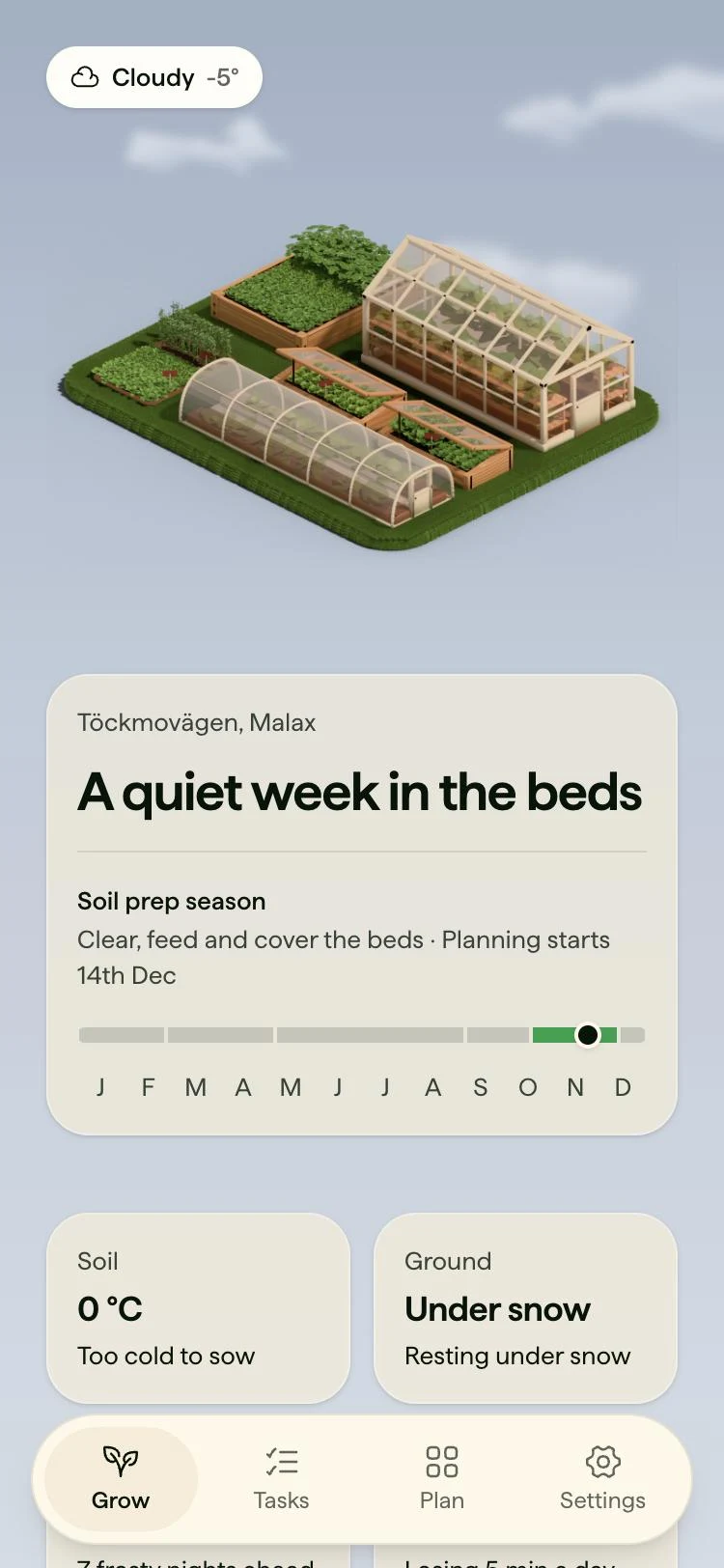
Grow is the screen you open without thinking. One look tells you what's happening in your growing space, what's expected of you and the few jobs that matter most right now.

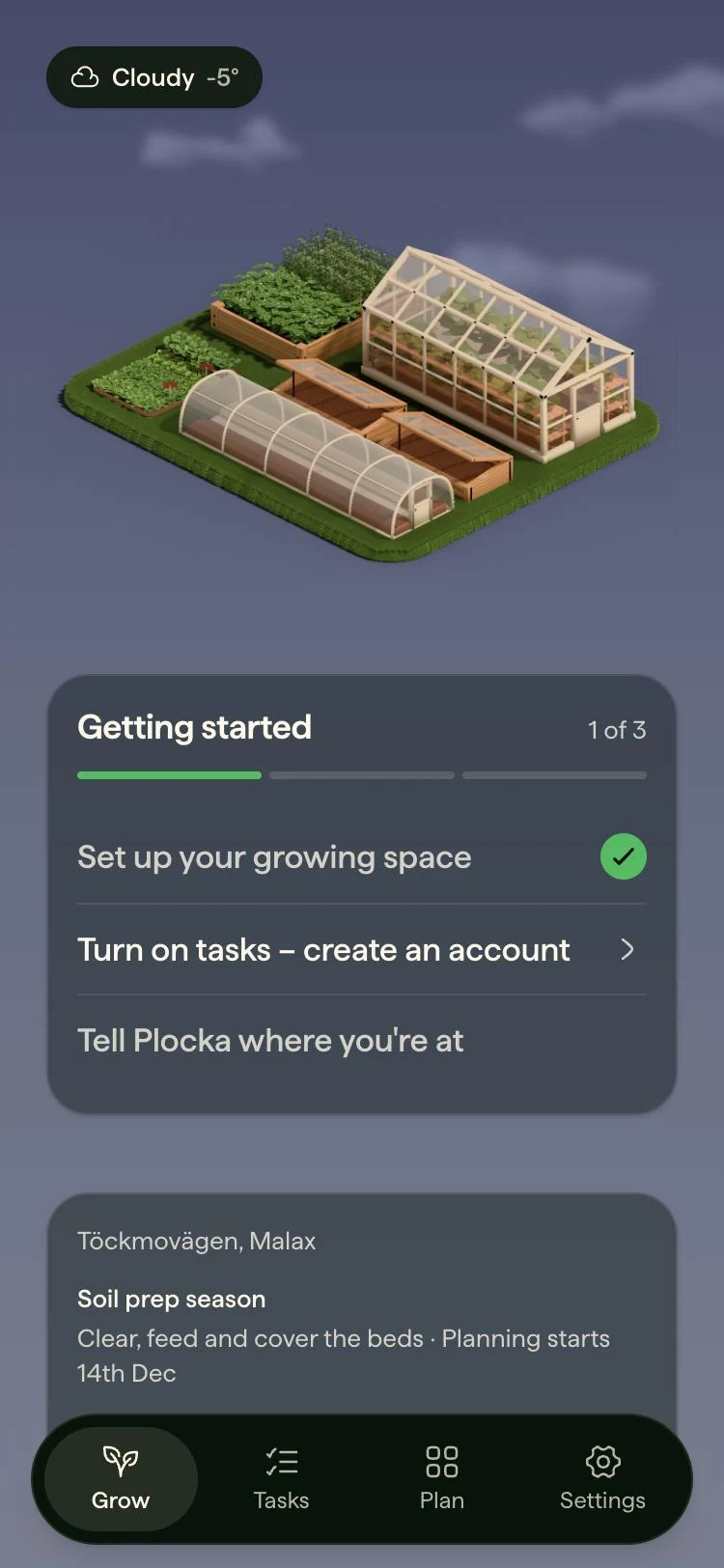
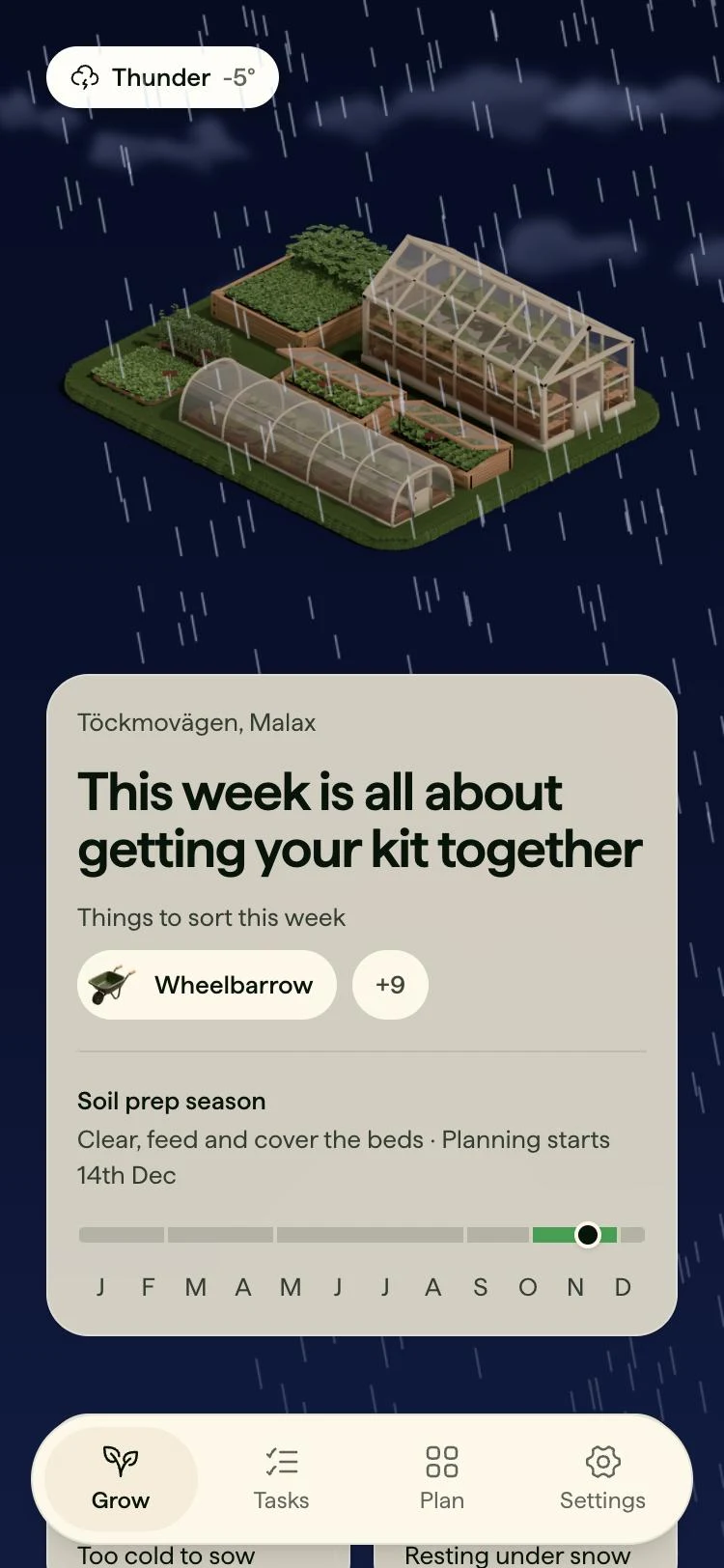
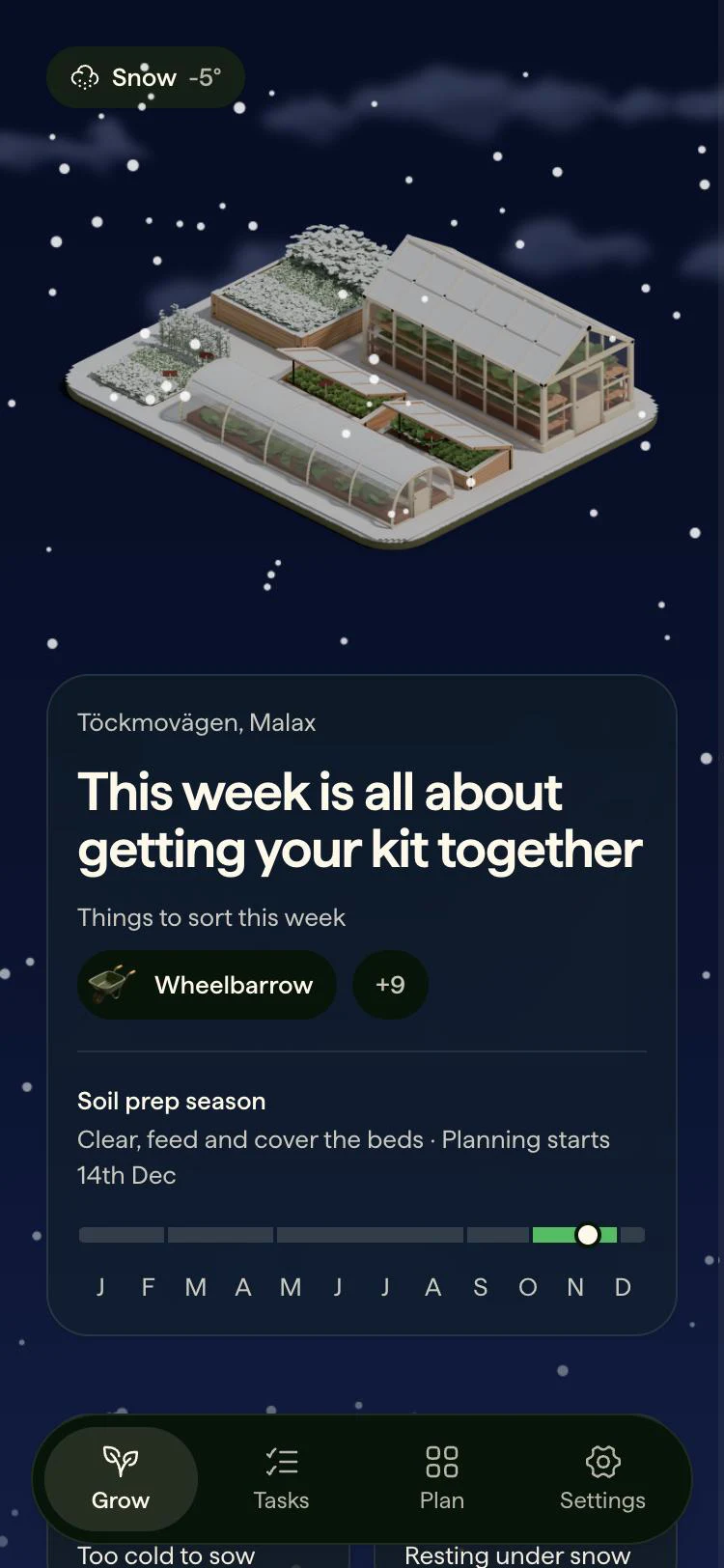
It changes with you. New to Plocka, it shows the next step in getting set up. Settled in, it gives you the gist of your week: what it's all about, where you are in the season, the conditions outside and the jobs that can't wait. The detail is always a tap away, never in the way.

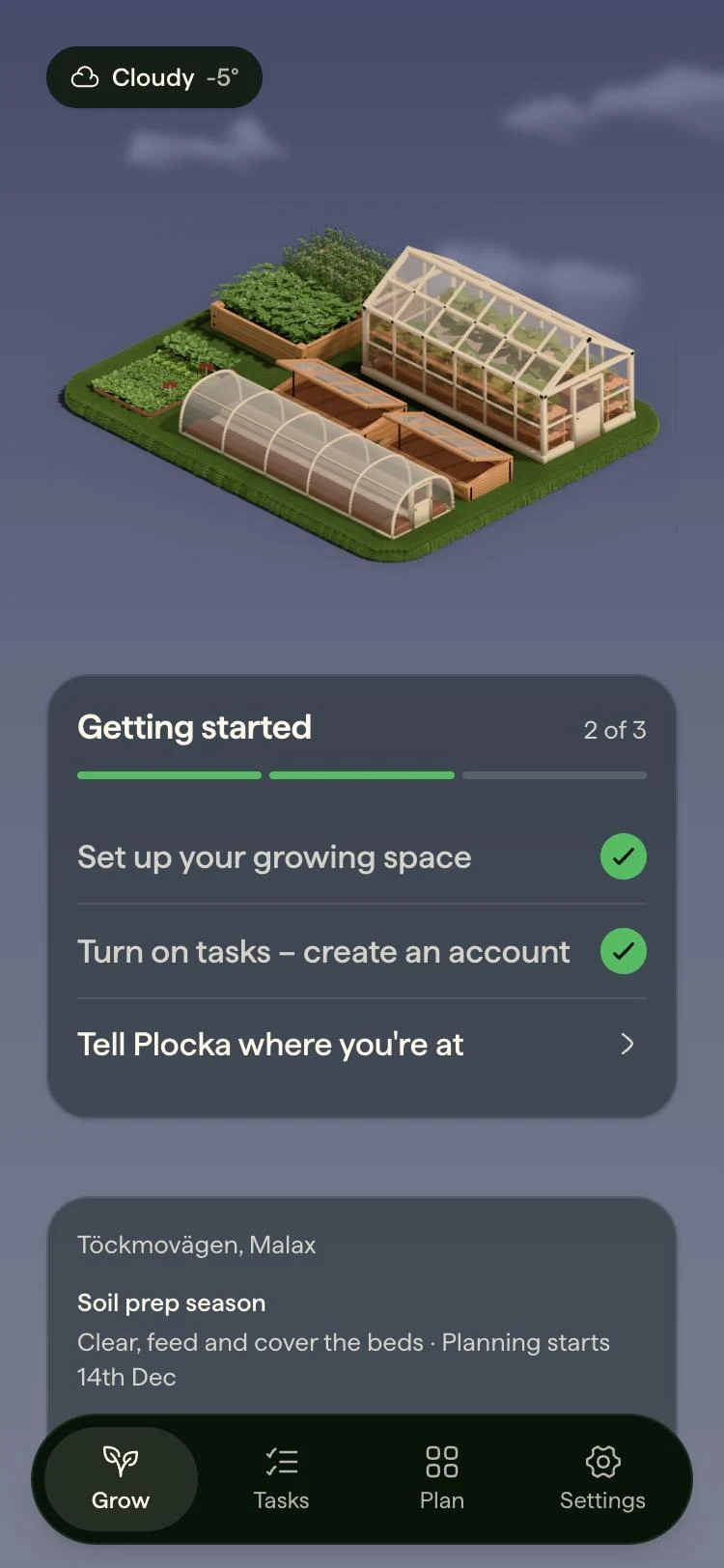
Getting started: the growing space is set up, next is turning on tasks
Getting started: tasks on, last step is telling Plocka where you're at
Set up: the week's headline, things to sort and where you are in the season
Grow on a snowy day, the garden under snow
A cloudy day with a frost warning: cover anything tender
Grow at night in a thunderstorm
A quiet week in the beds
Sowing season: this week is all about sourcing seeds, plants and kit
This week's tasks, with conditions above: soil too cold to sow, frost tonight
Dark theme: snowing at night
Dark theme: a quiet week in the beds
Dark theme: conditions and this week's tasks

How we worked

Think it through, then gun it

Before any code, Claude and I worked the concept through meticulously: nine planning docs on the idea, the data sources, how Plocka reads a location, the data model and the rules the build couldn't break. We tested the soil data too, on four deliberately different plots from the Ostrobothnia coast to Lapland. If they came back with the same advice, the idea didn't work. Once we understood each other perfectly, building was just gunning it.

Late-night tinkering

Built in the late evenings, one piece at a time. Take a single part, the timber on a raised bed, the grass, a task drawer, and refine it, and refine it, and refine it until it's amazing. That constant loop of iteration is where working with AI really shines.

Grown, not scaled

Made, not optimised

Every decision starts with what's right for the person growing, not what moves a number. You only make an account once Plocka has already shown its worth: your garden, your plan, your week. The whole experience is built around doing right by people and their gardens.

Curiosity makes it better

Learning the science properly, soil, frost and hardiness, is what makes the advice worth trusting. The nerdy part isn't a detour from the design. It is the design.

What's next

Plocka's still growing. Next up: a measurement plan to learn how people really use it, December included, then a small group of test users through the App Store, and a look at other countries.